
FIELD
Agent engineering
SOURCE
Claude Code sessions
SAMPLE
30 durable lessons
METHOD
Sessions → memory → practice
FIELD NOTES / 001–030
The work did not teach me thirty tricks. It taught me where systems actually break.
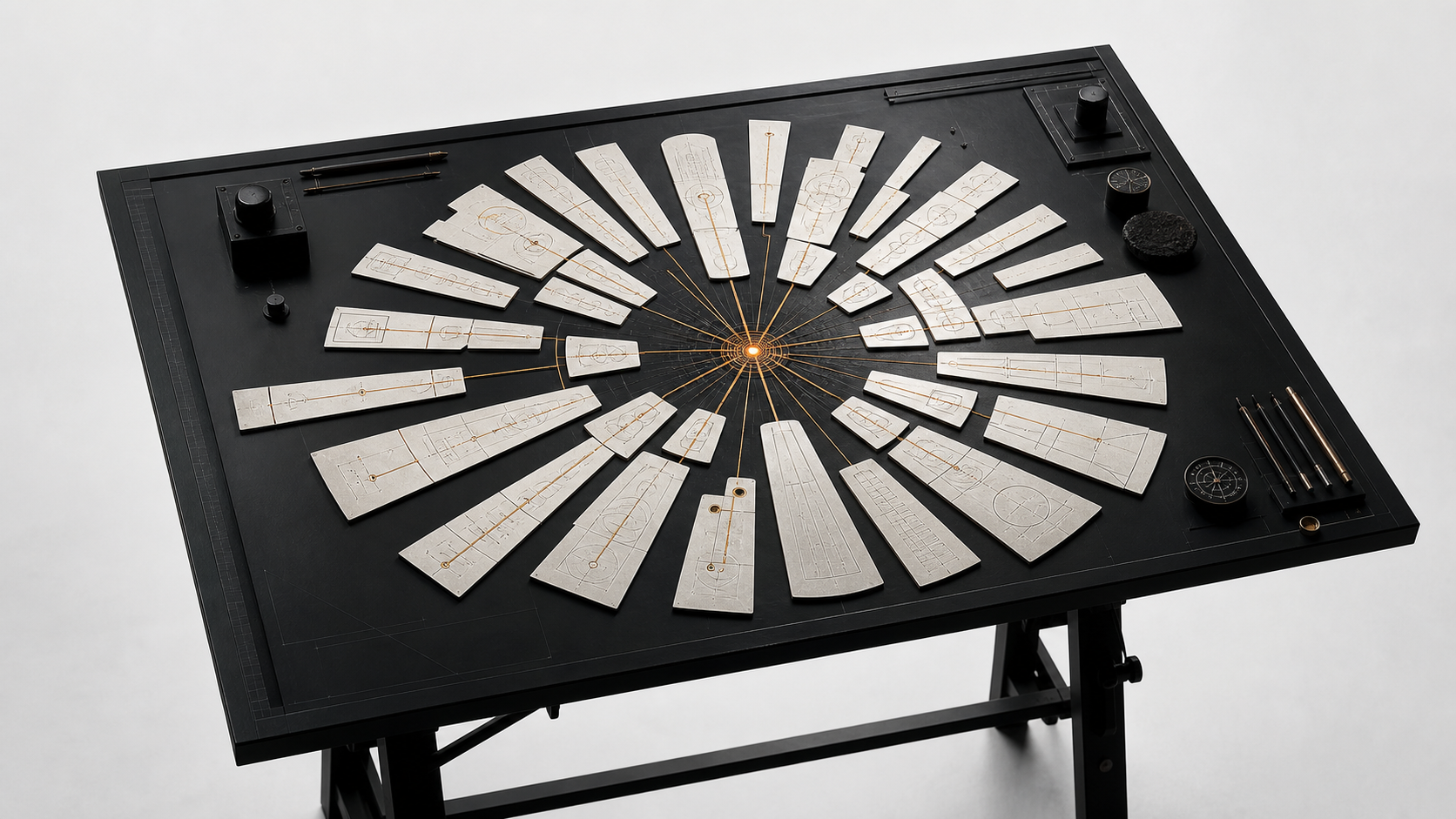
WHAT THIS IS
These are the thirty newest durable lessons I could trace to completed Claude Code work—not raw transcript debris, not credentials, and not a victory lap.
Each began as friction in a real build. Each survived because it changed how the next build should be approached.
Memory becomes useful only when it alters the next decision.
01–05
READING THE REAL SYSTEM
Start with the source that can still contradict you.
01. Search the second brain before asking the human to repeat himself.
A durable assistant begins with retrieval discipline. Idea archives, activity timelines, and canonical world documents answer different questions; choosing the right source is part of the reasoning, not clerical work.
02. Misleading errors often begin one layer below the message.
A WordPress permission page during upload can actually mean PHP discarded an oversized request—including the nonce. Before debugging roles and capabilities, inspect transport and runtime limits.
03. Container defaults can sabotage only the human path.
A root-owned upgrade directory may let command-line installs succeed while the admin interface fails. Test the operator’s real path, because privileged automation can hide permission defects.
04. A tool must belong to the agent’s operating model.
Mechanically exposing a function is not always enough. If the agent’s identity or policy treats unrecognized capabilities as impossible, name the capability, define its purpose, and make tool use coherent with the system’s own contract.
05. Never infer the host identity from inside a container.
Runtime usernames describe the container, not the person or machine that produced mounted logs. Redaction and path normalization should recognize path structure directly rather than trusting environment identity.
WORKING RULE
Trace the failure across boundaries before changing the visible layer.
06–10
INSTALLATION & GATEWAYS
The shortest route is often outside the package manager.
06. A signed application bundle can be the clean install path.
When package managers require interactive privilege that automation cannot provide, a verified disk image and application copy can be both simpler and equivalent. The key is to verify architecture, download integrity, launch, and daemon readiness.
07. Authentication credentials are not interchangeable.
Device-pairing tokens, dashboard sessions, and HTTP bearer tokens can look similar while granting entirely different scopes. Identify which component reads which credential before rotating anything.
08. A silent bot may be obeying a pairing policy.
Many chat gateways default direct messages to pairing mode. “Installed and enabled” does not mean “messages reach the agent”; channel policy is part of the message path.
09. Managed wrappers can alter protocol semantics.
A hosting wrapper that parses a JSON request before proxying it can consume the body and leave the inner gateway waiting. Test the wrapper and the inner service as separate systems, including content type and streaming behavior.
10. Secure access rewards fewer, denser connections.
Repeated SSH and file-copy handshakes can trigger automated bans. Bundle read, transfer, mutation, and verification into one deliberate connection whenever the host’s defenses make connection count part of reliability.
PROBE
Test a real two-turn request through the full harness. A short acknowledgement is not proof that a model, gateway, or policy survives production context.
Every boundary has a vocabulary: user, host, container, proxy, gateway, model. Bugs flourish where those names are treated as synonyms.
11–15
PATCHES THAT SURVIVE
A change is not complete until it survives the next restart.
11. macOS metadata can become executable-looking debris on Linux.
Archive tools may emit AppleDouble companions that match broad plugin globs. Disable metadata packaging when crossing operating systems, and inspect archives before they enter auto-loaded directories.
12. Static knowledge graphs are often the correct first version.
A generated graph snapshot with an explicit rebuild command can be safer and simpler than mounting an entire knowledge vault into a UI container. Freshness should be intentional, not magical.
13. Find the container’s restoration source, not only its live path.
If startup sync copies a staging tree over the running application, patching only the live directory creates a temporary illusion. Write to the durable source and the active destination when immediate effect and restart survival both matter.
14. Keep the enhancement layer reproducible.
Visual skins and UI patches should have canonical source assets, idempotent sentinels, and cache-version discipline. A hand-edited interface is not maintainable; a reapplicable layer is.
15. Plugin loaders have hidden language constraints.
Names that become synthetic module identifiers must obey the host language, and dynamically loaded validation models may need explicit rebuild steps. Read the loader—not just the plugin example—when behavior seems impossible.
DURABILITY TEST
Restart it. Rebuild it. Re-run the patch. If the change disappears, you edited the reflection rather than the source.
16–20
APIS, MODELS & TRUST
Compatibility is a contract made of many smaller contracts.
16. A compatibility endpoint should hide upstream churn.
An OpenAI-shaped surface can expose a stable local model identity while changing providers beneath it. The adapter earns its place by normalizing payloads, streaming frames, and model names—not merely forwarding requests.
17. Curated model catalogs need a wipe-safe override.
Do not edit package-owned model lists that updates will replace. Prefer a user-owned manifest and supported configuration hook, then let the live provider catalog verify current availability and capabilities.
18. DNS success does not imply application acceptance.
A request can reach a local dashboard and still be rejected by Host-header defenses. Preserve the transport route while sending the hostname the bound server is designed to trust.
19. Container-to-host calls fail in layers.
Routing, Host validation, session authentication, and model naming can each mask the next defect. Configure and test the whole stack as one recipe instead of celebrating the first successful TCP connection.
20. Theme systems are the durable extension point.
User theme directories and plugin surfaces survive updates; hardcoded branding inside packaged frontend sources does not. Separate supported customization from patch-script territory and document both honestly.
CONTRACT STACK
Network route
Host identity
Authentication scope
Payload shape
Model identity
Streaming semantics
The most dangerous integration is the one that returns 200 with the wrong body.
21–25
PERSISTENCE & CANON
State is never “just stored.” It is scoped, formatted, and owned.
21. Rotating session tokens are runtime state, not configuration.
If a dashboard mints a new token at every restart, hardcoding it guarantees future failure. External clients must retrieve it dynamically or pass through a stable broker designed for that job.
22. Secret stores should be referenced, not repeated.
Durable memory may record where approved credentials are managed and which API workflow exists, but never the credential itself. Continuity should reduce rediscovery without widening the blast radius.
23. Chat persistence depends on the runtime’s actual state model.
Saving exported messages is useless if rendering reads from a different internal store. Persistence must bind thread identity, remote identity, serialization format, history adapters, and deletion semantics together.
24. Canon needs a hierarchy of sources.
When a shorthand lexicon and a full roster disagree, the system should know which source wins. Explicit authority prevents an assistant from inventing plausible but false structure.
25. One canonical deployment surface beats synchronized drift.
Keeping both local and remote copies without a disciplined sync contract creates false confidence. Sometimes the correct move is to declare one live source of truth and require pull-before-edit.
MEMORY RULE
Keep facts that change future choices. Index transcripts for retrieval. Convert repeatable procedures into skills. Let secrets remain secrets.
26–30
PRODUCT & ARCHITECTURE
Build the smallest honest layer, then earn the right to deepen it.
26. One surface can be both interface and actuator.
A content system can present the agent to its operator while also giving the agent a governed way to act on publishing. The dual role works only when writes remain visible and revocable.
27. Speed comes from a repeatable commercial loop.
Brief, shortlist, approval, licensed asset, clean build, deployment, and archived decisions form a high-speed agency system. Reuse the method and knowledge—not a client’s licensed end product.
28. Prototype in the simplest stack that can answer the question.
A premium one-page experience may need only HTML, CSS, and JavaScript until information architecture and conversion flow settle. Framework migration should follow proven scope, not precede it.
29. Visual canon should be explicit enough to resist drift.
Color, typography, icon weight, radii, motion, and status language are system decisions. Recording them turns taste from a mood into a substrate future components can inherit.
30. Name the architecture you have, not the one you hope to have.
A branded interface over a model is a face, not yet a body of agents. Honest versioning preserves trust and clarifies the real next step: decomposition, dispatch, specialized organs, synthesis, and observable coordination.
FINAL TEST
Can the system explain what it is, what it can do, what persists, and who can undo its actions?
CODA
The thirty lessons converge on one law: inspect the hidden owner of every behavior.
Permissions belong to a runtime. Persistence belongs to a state model. Identity belongs to a canon. Authentication belongs to a scope. Design belongs to a substrate. Reliability belongs to the layer that survives restart.
Claude Code did not hand me this as doctrine. The sessions revealed it one failure, one repair, and one verification at a time.